
What we brush aside as “manageable” is not normal. It is aNORMALy.
Across every workplace, capable people clear their annual health checkups with reports that read “Normal”—yet live with daily tiredness, unrefreshed mornings, acidity, afternoon slumps, and quiet stress. Passing a lab test only means illness hasn't crystallized yet; it does not mean we are Positively Healthy.
Annual health checks provide valuable clinical information, and the wellness initiatives you already run show how much you care for your team. The Workplace aNORMALy Score complements them by helping people consider everyday experiences such as energy, sleep, food routines and stress—identifying shifts early before a problem solidifies, and guiding your people toward a happy, healthy, productive, and meaningful life.
No employee roster required · Individual responses excluded from employer reports · Reports begin at 10 participants
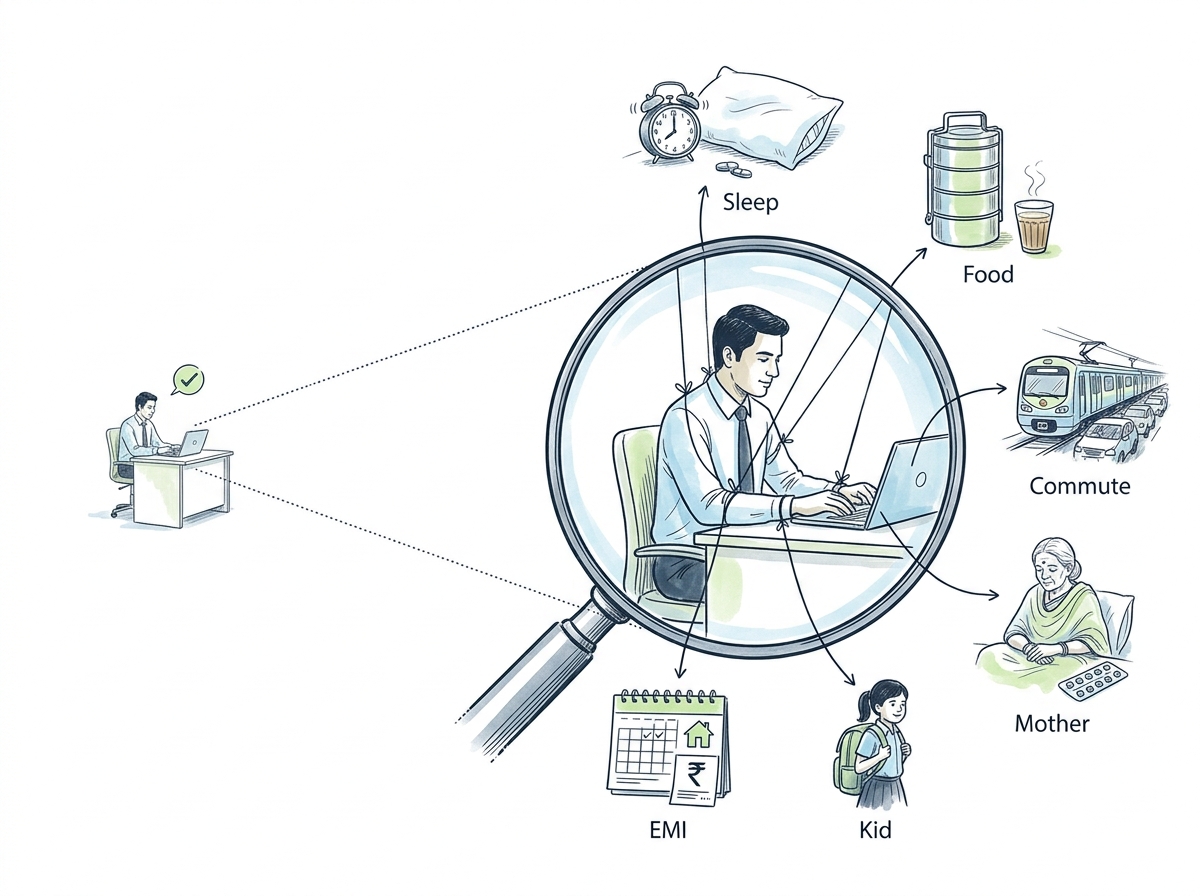
A private 7-minute reflection on everyday vitality, plus Wellness Plus access for up to 10 family members.
An aggregated pulse of shared workforce patterns—so your wellness efforts focus where they matter most.
What is aNORMALy—and why does every workplace need its score?
Watch how the aNORMALy Lens bridges the gap between a routine checkup that reads “Normal” and the everyday vitality your people actually bring to work and back home.
Your lab report says 'Normal.' Why does 3 PM feel like 18%?
Health does not shift all at once in a hospital. It shifts quietly through the workday.
Before any illness shows up on a clinical chart, everyday life leaves clear signals across three moments of a normal working day.

What we bring from home shapes how we begin.
Whether someone wakes up rested or already tired—and whether a parent, spouse, or child at home is unwell—travels with them right to their morning desk.
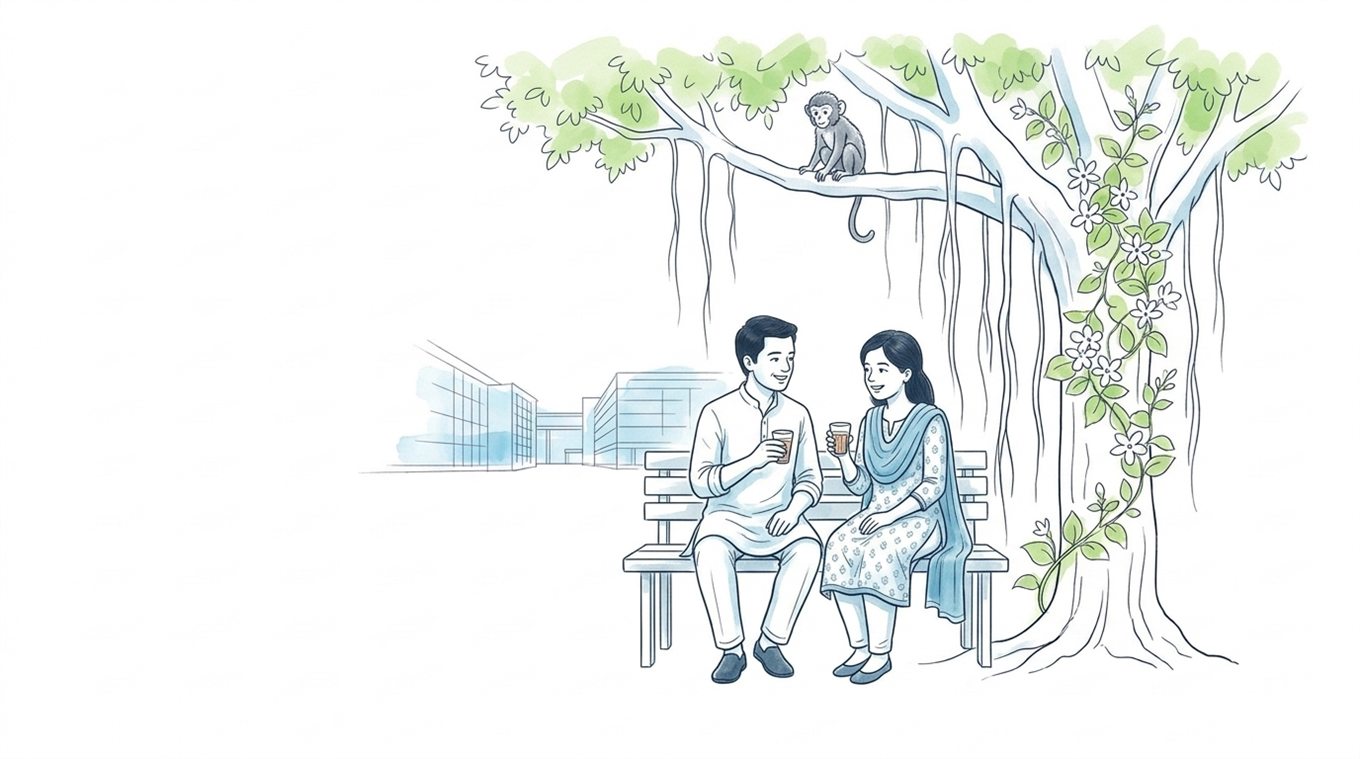
The 3 PM slump we call “normal office life.”
Long sitting hours, delayed lunches, acidity, and relying on extra cups of tea or coffee to survive the afternoon are early signals of unrecognised strain (aNORMALy).
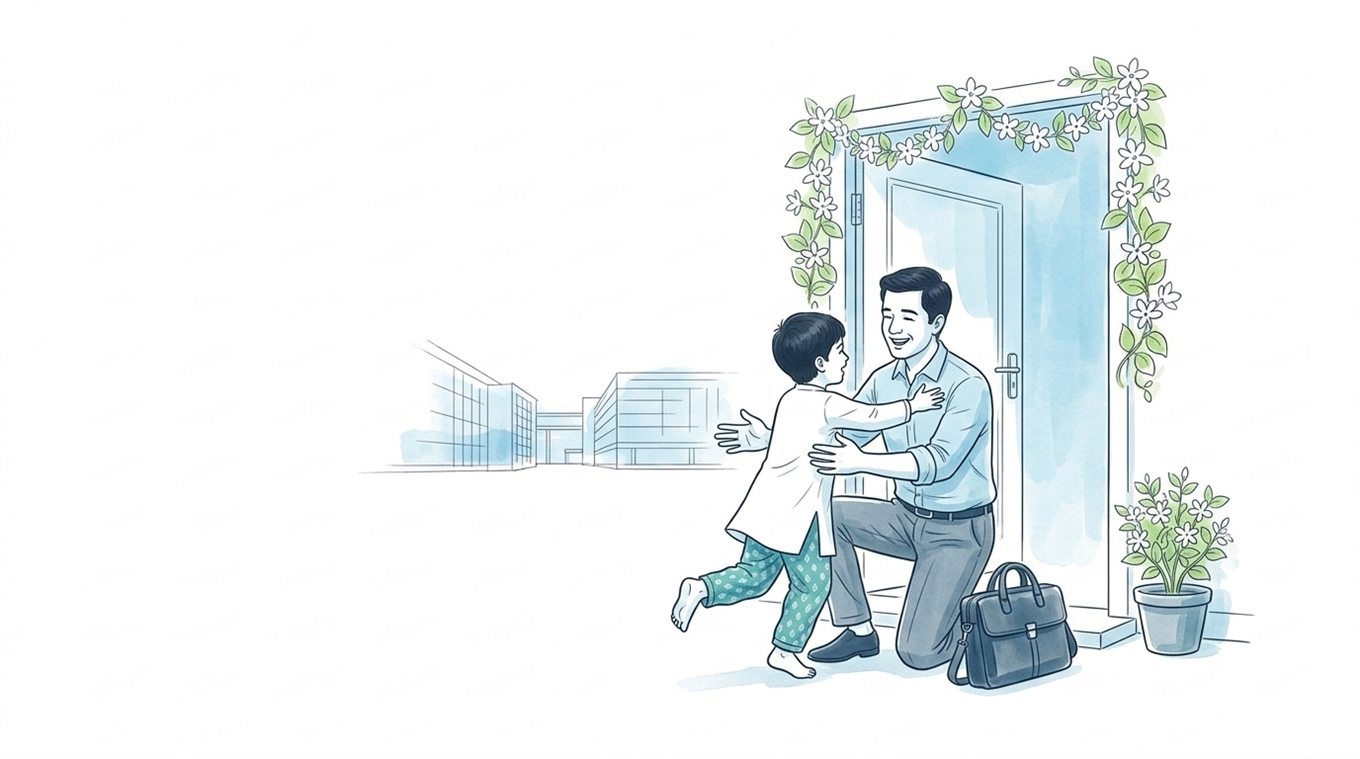
Who gets the best of us—and what is left at 7 PM?
The truest measure of workplace wellbeing is whether our people step through their front door at 7 PM with energy, patience, and joy left for the people they love.
Three quiet reflections. One honest aNORMALy Score.
A single symptom checklist can never understand a human being. In about seven minutes, the aNORMALy reflection listens across three connected lenses—where we stand today, the everyday life circles shaping our health, and how deeply we recover overnight.
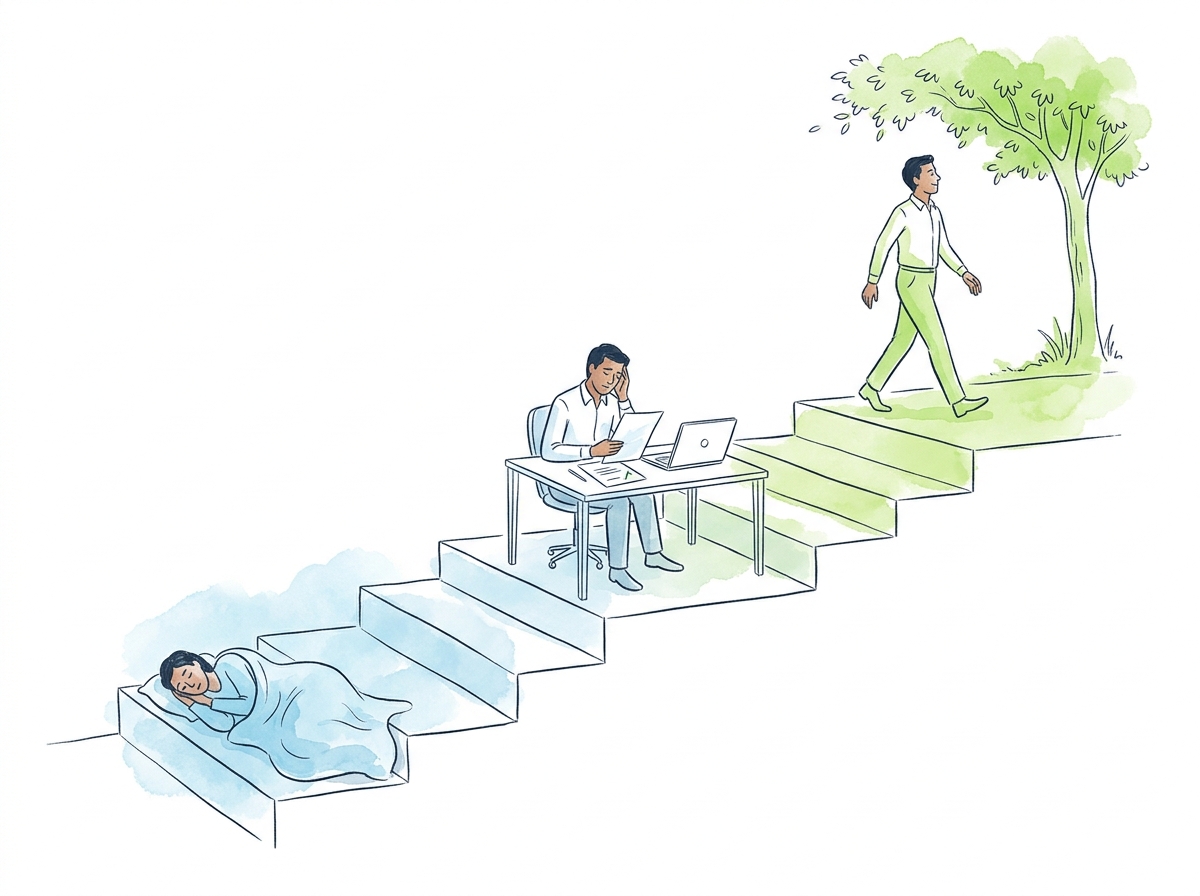
Where do I stand today?
Helps participants reflect on their current wellbeing across six broad stages—from Unrecognised Sickness (aNORMALy) to being Positively Healthy.
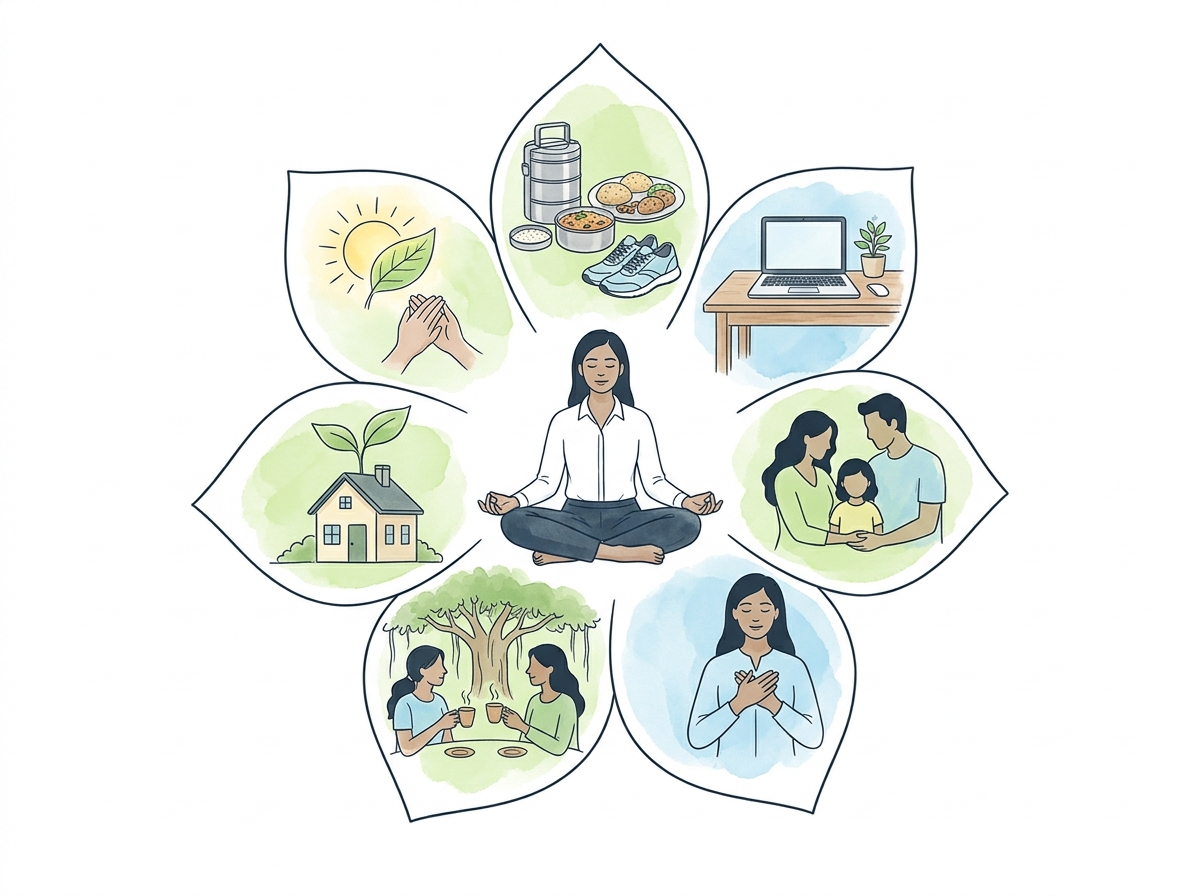
Why am I here?
Looks at the seven everyday circles of life—food, work rhythm, family, emotional balance, community, finances, and meaning—that shape physical health.
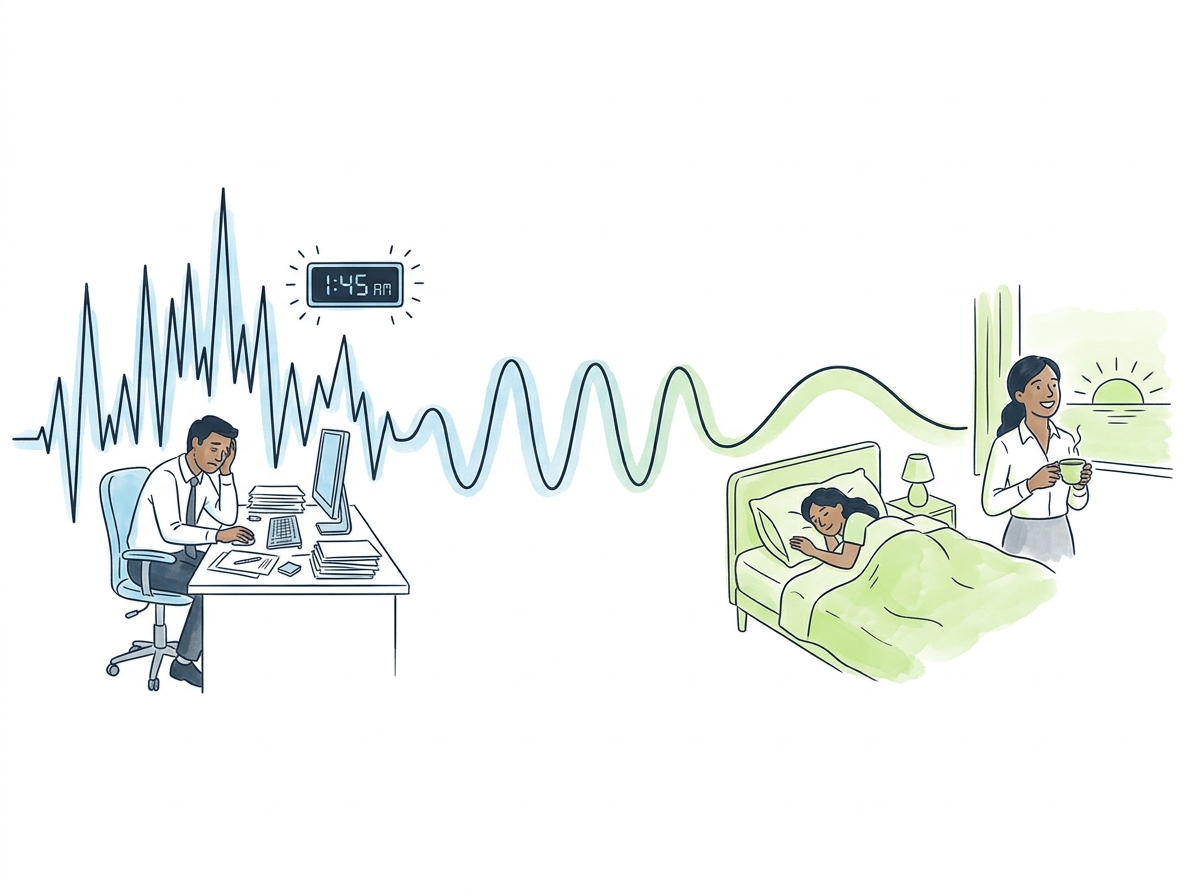
How rested is my nervous system?
Reflects self-reported experiences of stress, sleep and recovery—distinguishing between pushing through on adrenaline and calm, sustainable energy.
From the boardroom, you see the forest. We help you care for every leaf.
From the boardroom, an organization looks like a single forest—yet a forest only thrives through the wellbeing of every individual leaf. A jasmine flower never sends an announcement to say it is blooming; when people feel supported with clear privacy protections, honest participation grows naturally.
Your Family’s Health Atlas in Your Pocket (Up to 10 Family Members)
Why do we include up to 10 family members for every colleague? Because no one leaves their family at the office gate. Every day, employees subconsciously carry the stress load of their household’s health right at their desk:
Covers husband and wife, their children, their father and mother, and their mother-in-law and father-in-law—so both sides of the family are cared for.
Covers their father, mother, brothers, and sisters—giving young professionals clarity on the parents and siblings they support at home.
Each participant may privately invite up to 10 eligible adult family members (and maintain a structured household Health Atlas in their pocket). Family responses are excluded from workplace reporting and handled under the published family-participant privacy policy.
The Workplace aNORMALy Score
Individual responses are not included in employer reports. Organizations receive aggregated findings only after the minimum reporting threshold is met.
What if someone—or a parent at home—is already living with a condition?
While the aNORMALy Score is uniquely powerful at spotting early, unrecognised shifts before illness solidifies, we never stop there. In any workplace and across any 10-member family circle, many colleagues or their parents are already dealing with diabetes, blood pressure, thyroid, digestive, or metabolic conditions.
They never have to wait or wonder what the solution is. Whenever a participant or family member wishes to go further, they can take a natural detour to holisticnutrition.works — where our full-fledged team of seasoned, qualified dietitians, nutrition professionals and lifestyle educators (who have completed relevant HNW or ALSM training and served patients for years) provide structured lifestyle restoration pathways that work respectfully alongside their treating physician.
How do you get honest answers in a workplace? By making honesty completely safe.
An employer sees the forest; only you hold your leaf. When employees know their personal identity is separated from employer reports, they stop giving “polite” answers and reflect honestly for their own wellbeing—giving your organization a truthful Workplace aNORMALy Score.
People only reflect honestly on their tiredness, stress, sleep, and family load when they know it will never be used to judge them at work. Protecting the individual is what makes the group Workplace aNORMALy Score accurate.
Individual responses are not included in employer reports. Responses are separated from administrator contact details and reported to the organization only in aggregated form once at least 10 participants complete the check-in.
Designed around India's Digital Personal Data Protection (DPDP) Act principles: pseudonymous participant tokens, strict purpose limitation, encrypted storage, and the participant's right to view or delete their personal record at any time.
The aNORMALy Score is a non-diagnostic educational reflection that complements routine medical care. Participants reporting significant clinical concerns are guided to consult an appropriate healthcare professional.
Everything founders, HR leaders, and clinicians ask us.
Twenty years on plastic chairs and factory floors. Before a single line of code.
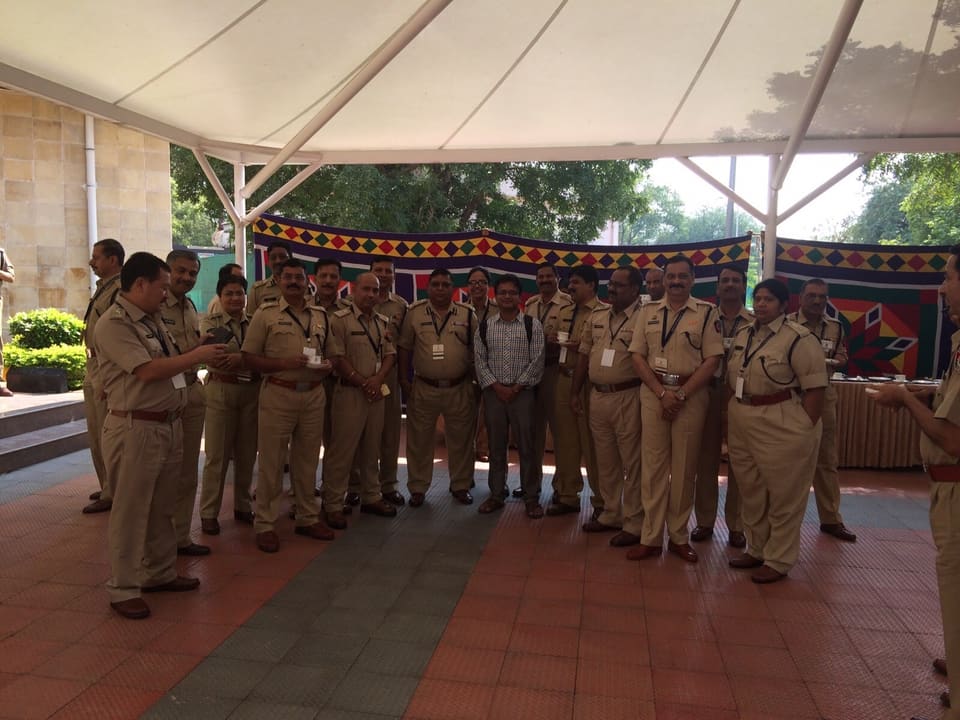
These archival photographs from 2012–2015 are just a few preserved glimpses from many more organizations, manufacturing plants, banks, schools, and public institutions where our clinical and lifestyle medicine team led earlier health education sessions—demonstrating the field experience that informed today's wellbeing reflections.
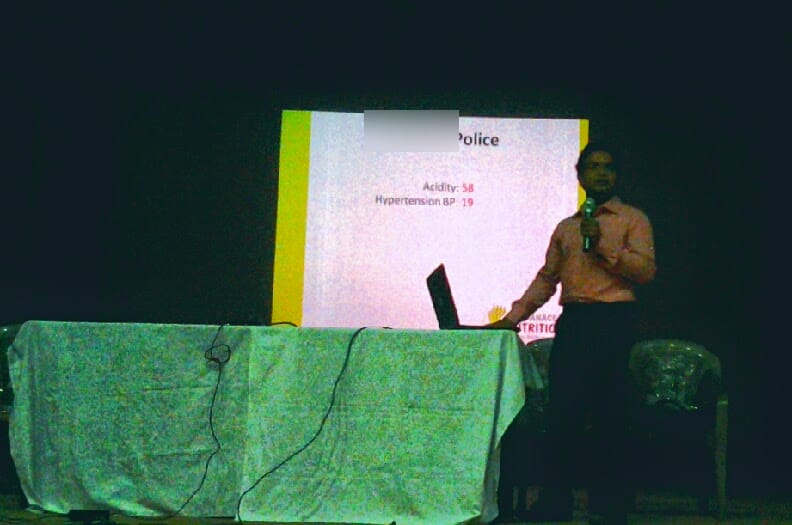
Group Health Summary Slide: “Acidity: 58 · Hypertension BP: 19”
During a 2013 workforce health session at one of the police commissionerates, we summarized group-level health patterns—such as acidity and elevated blood pressure readings—to guide collective health education.
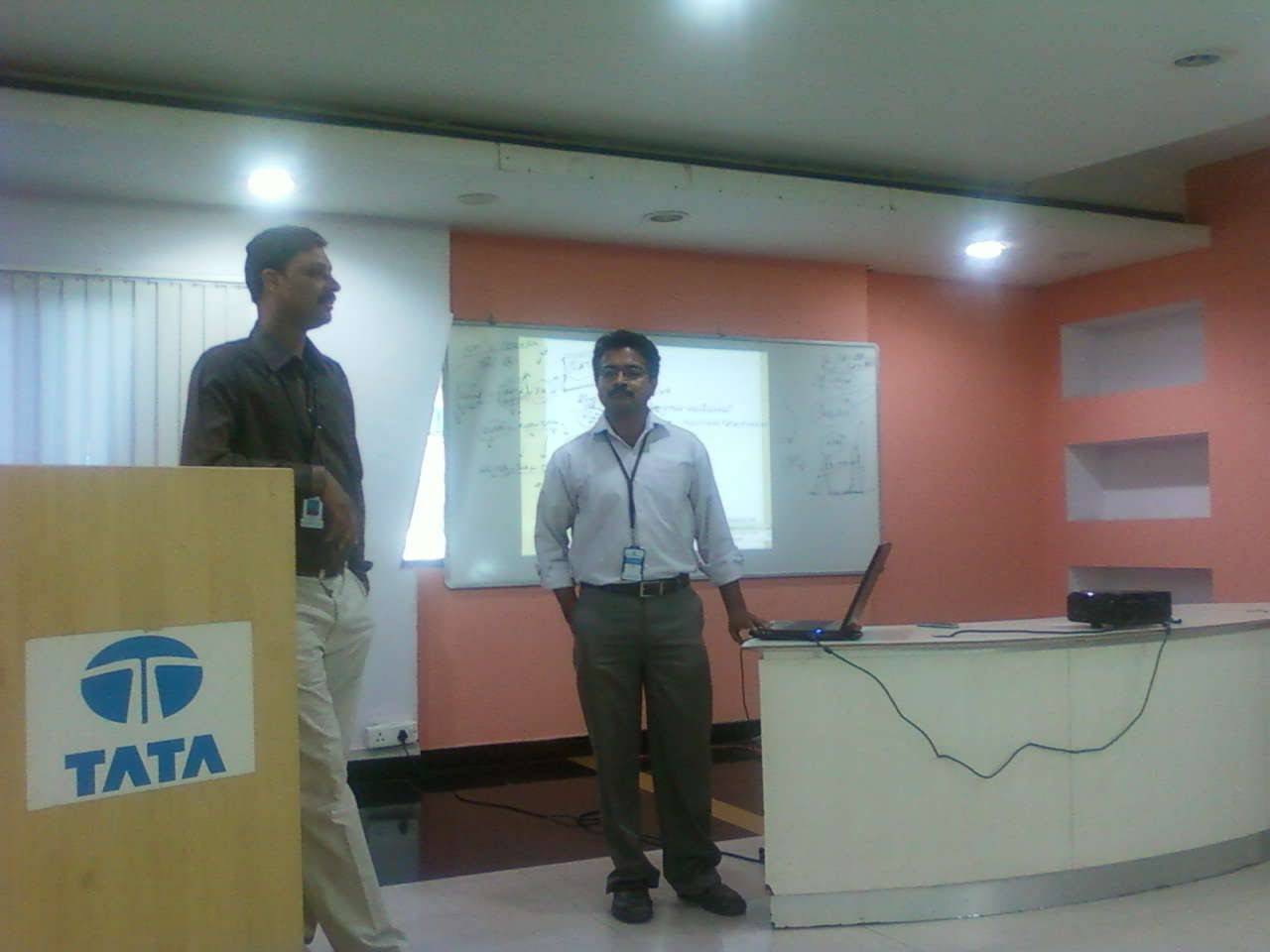
Executive & Workforce Wellbeing Briefings
In workplace sessions, employees frequently asked about afternoon fatigue, sleep quality, and meal routines between their annual medical checkups.
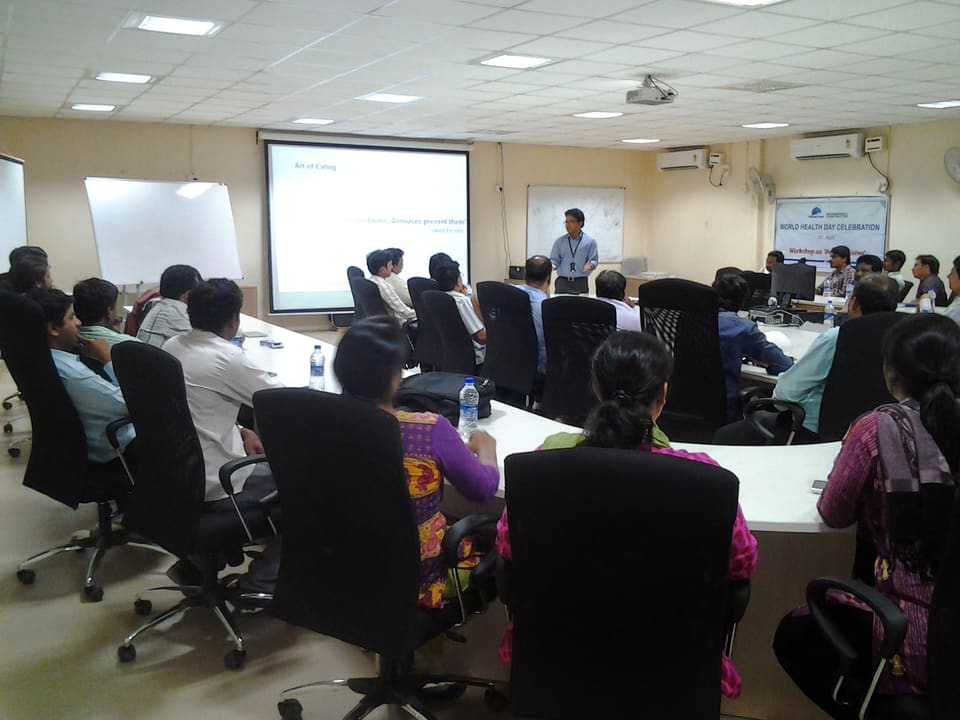
“Art of Eating & Healthy Living” — World Health Day Workshop
Engineering leaders and site managers discussed practical ways to balance meal timing, hydration, and long working hours.
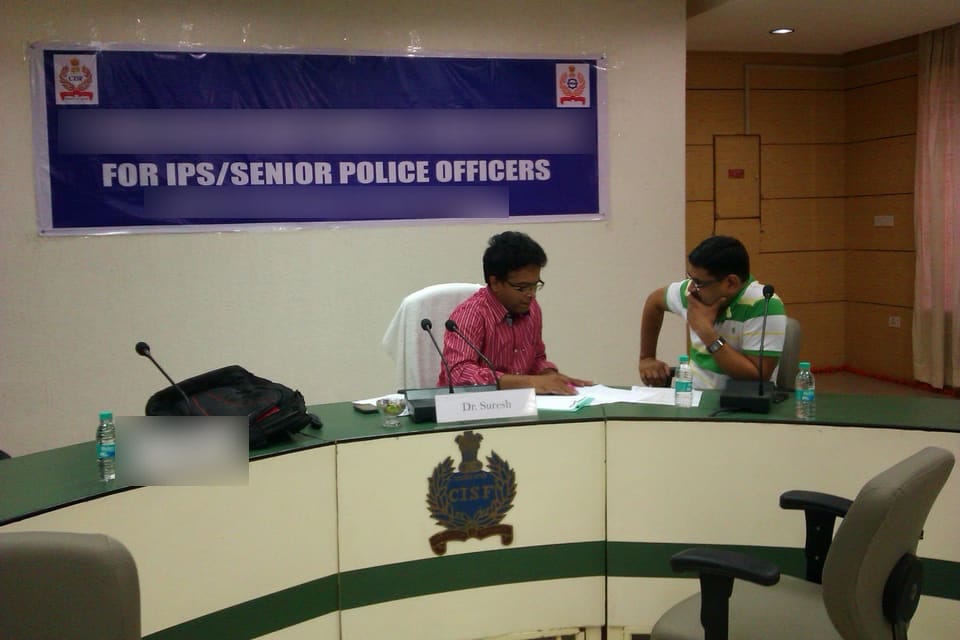
Health & Stress Management Workshop for IPS & Senior Police Officers
Sessions with command-level IPS and CISF officers highlighted the importance of sleep recovery and unwinding after high-responsibility shifts.
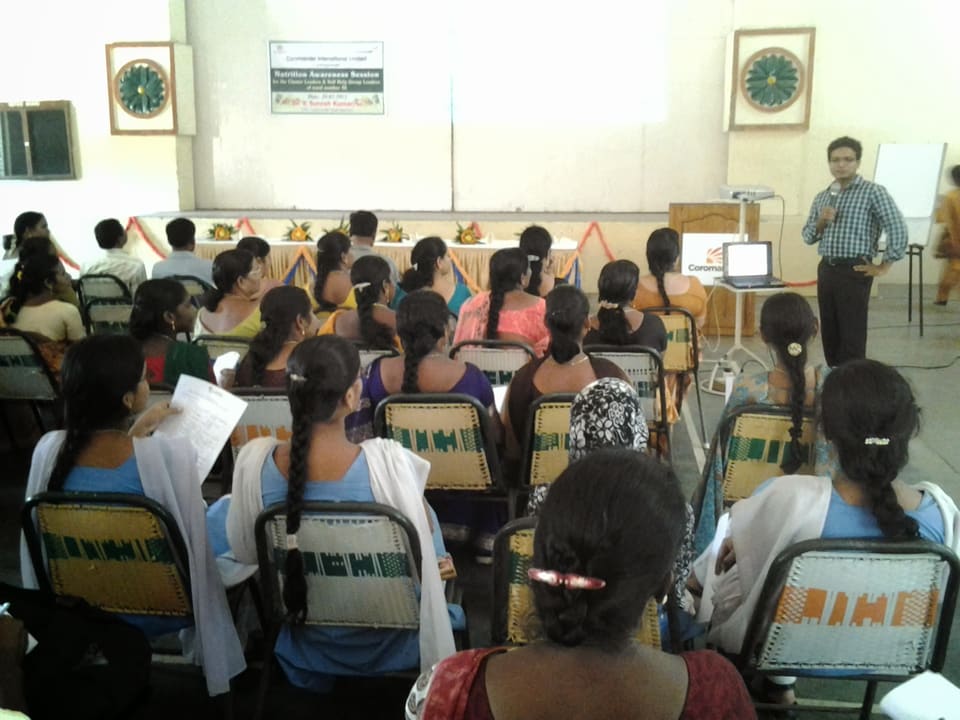
Nutrition & Health Awareness for Cluster & Self-Help Leaders
Sharing practical nutrition education with cluster leaders and women's self-help group champions helped bring everyday health habits into households.
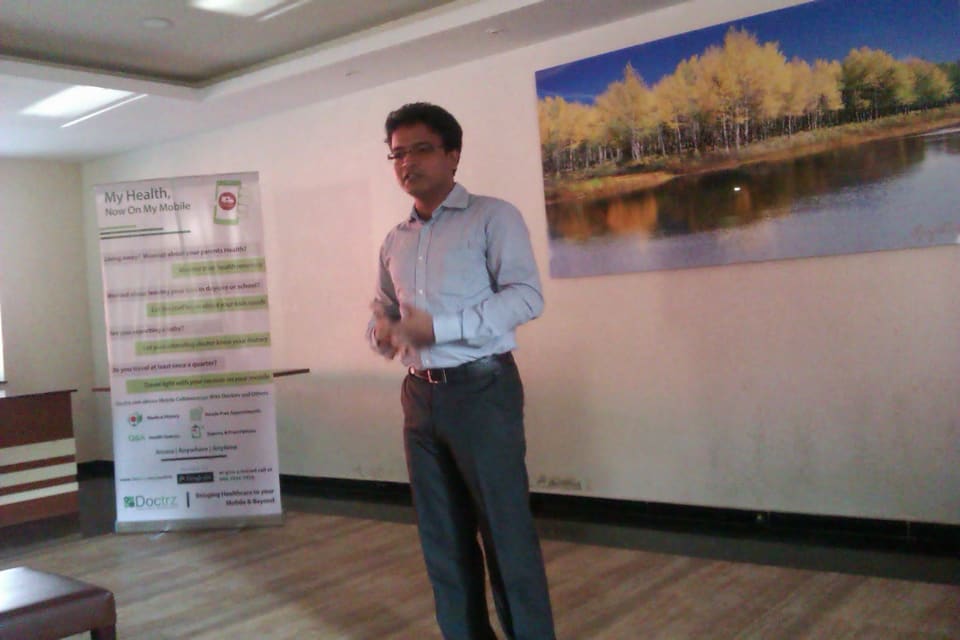
Early Mobile Health Record Initiative Across Life Stages
Our 2014 banner invited families to organize health records across parents, school children, pregnancy, and work travel.
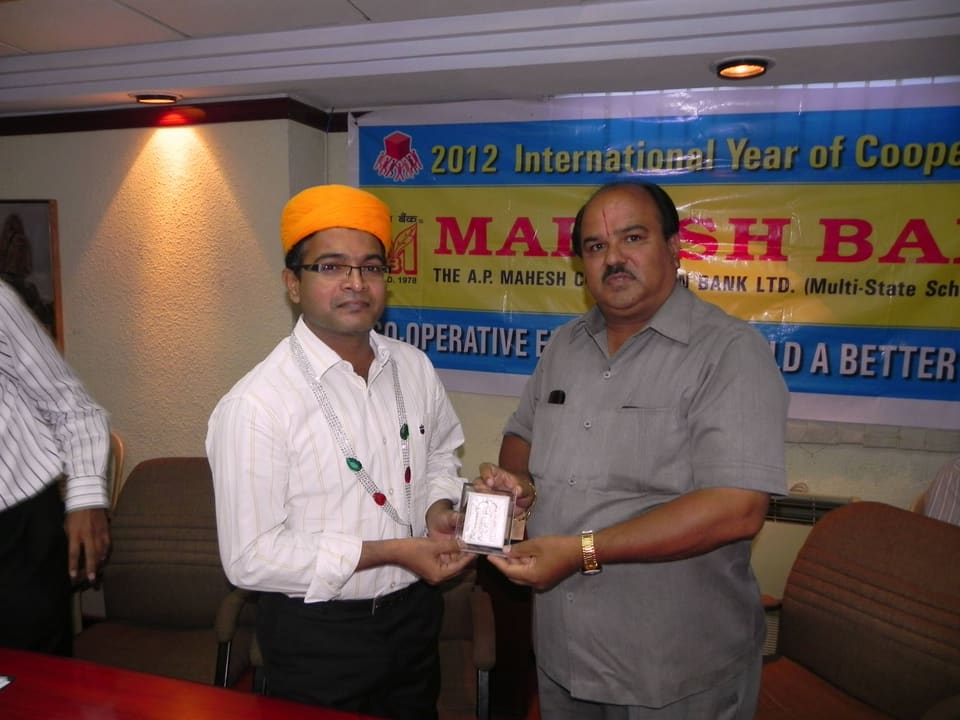
Health Education Session for Banking Leadership & Staff
Banking professionals shared challenges around long sitting hours, late meals, and seasonal workload pressure.
Dedicated Women's Workforce Sessions on Everyday & Hormonal Wellbeing
Dedicated sessions created a comfortable space to discuss menstrual health, fatigue, and household balance.
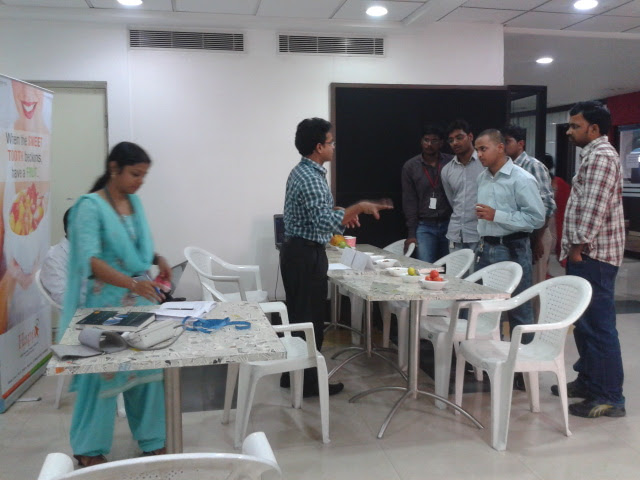
On-Site Cafeteria Nutrition Desks (“When the Sweet Tooth Beckons”)
Supporting everyday habits meant meeting people where they eat—at the workplace cafeteria counter and dining table.
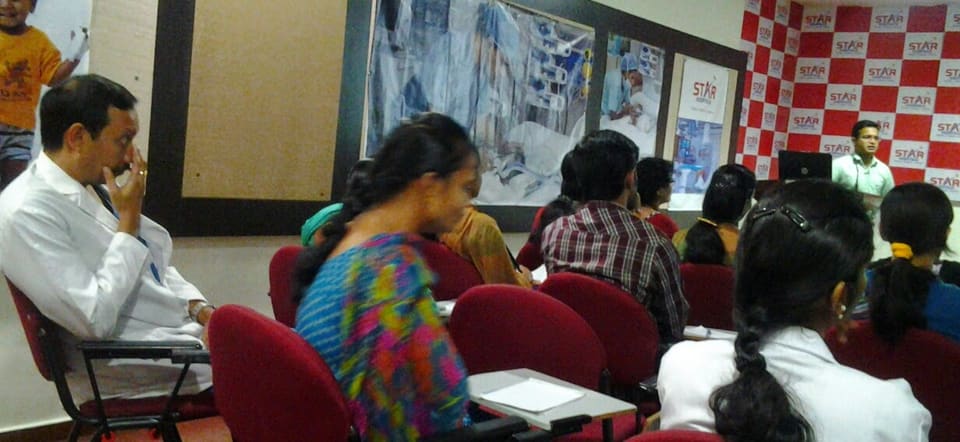
Discussions with Hospital Physicians, Surgeons & Clinical Teams
Working alongside hospital physicians reinforced that lifestyle guidance should always support—never replace—a treating doctor's care.
Beyond the boardroom. On lawns, beside fruit tables, and in classrooms.

Sitting on plastic chairs on the grass with a clipboard, listening unhurriedly to mothers, elders, and families in the community.
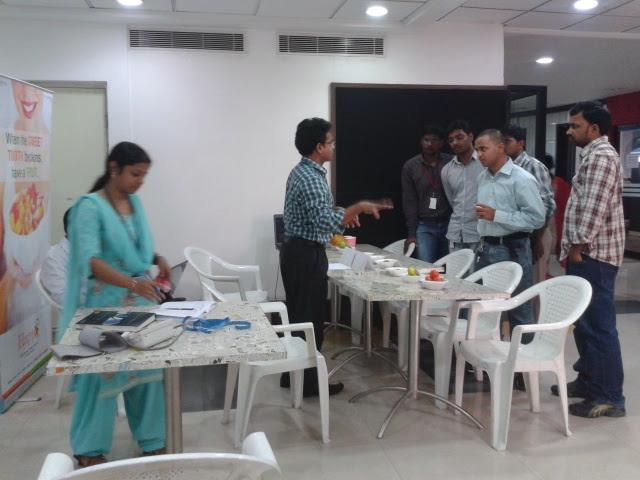
Standing beside bowls of fruit at dining and cafeteria tables, discussing simple everyday meals for office-goers and families.
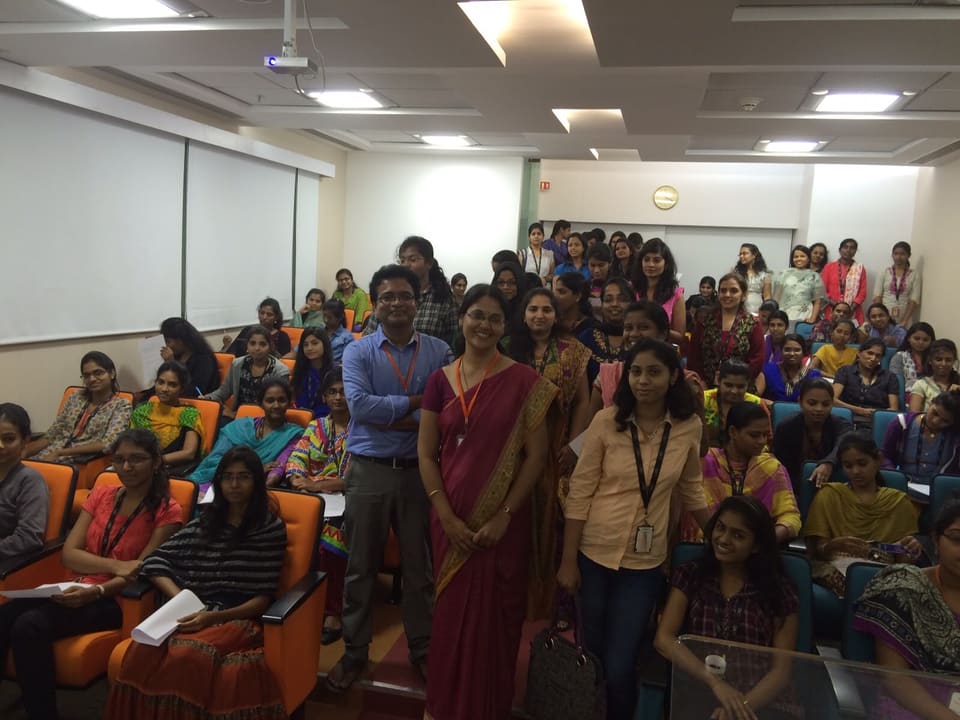
Teaching students in university lecture halls and mentoring lifestyle coaches to support patients alongside their treating doctors.